Celebrating excellence in student voice practice across Australasia.
The inaugural 2025 Student Voice Australasia Student Voice Awards recognise students, staff and institutions that are leading the way in embedding student voice, agency, and partnership into all levels of institutional decision making.
Whether you're just starting out or have a mature model of student voice and engagement—your impact matters, and we want to celebrate it.
2025 Award Winners
Congratulations to our 2025 Student Voice Award Winners. Drop down below to read more about their amazing nominations.

-
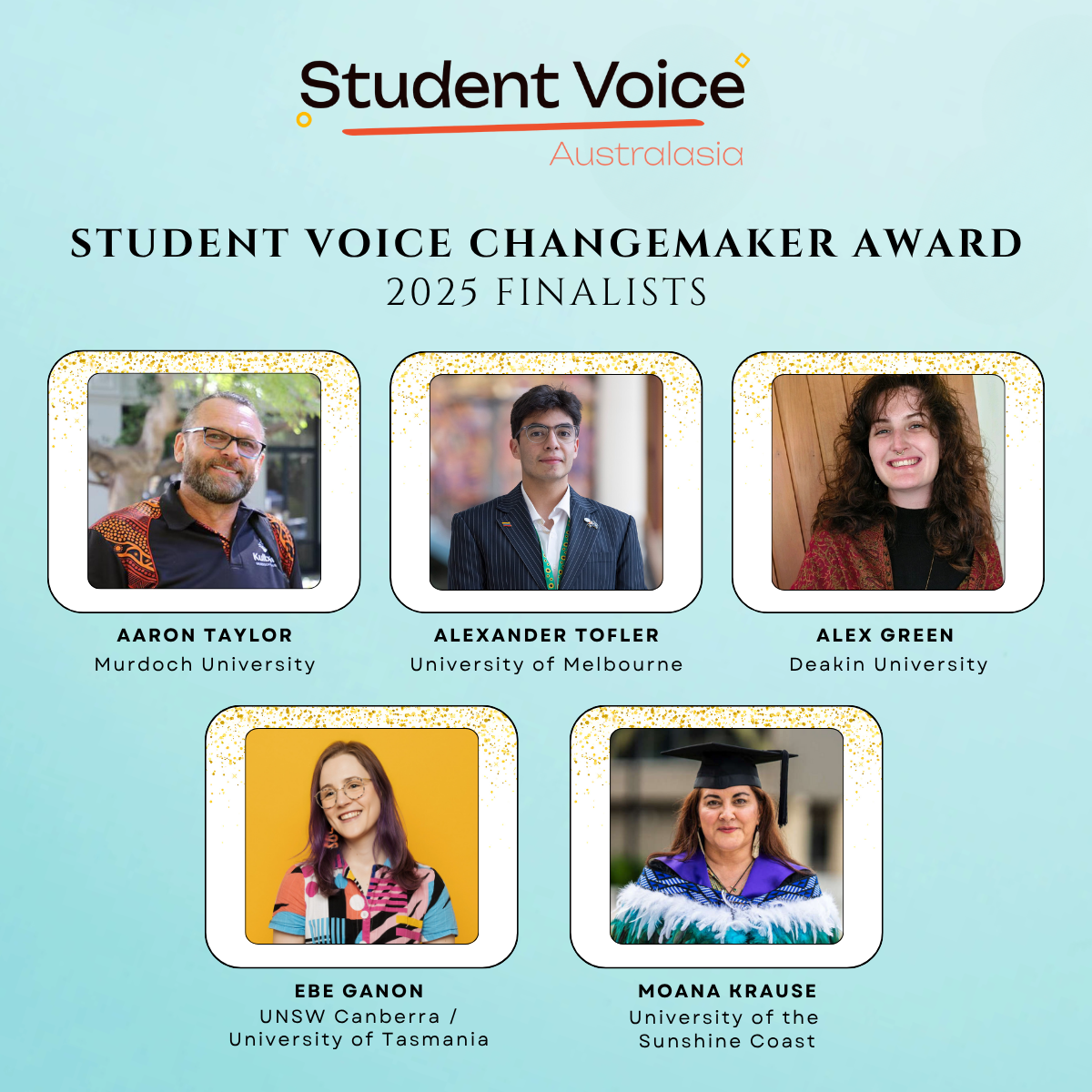
Ebe is a PhD student and research associate at UNSW Canberra and the University of Tasmania, whose work exemplifies transformative student-led advocacy. As a neurodivergent student, staff member, and graduate, Ebe has championed systemic change across Australian universities to improve accessibility and inclusion for students with disability.
In 2025, Ebe led a multi-level advocacy strategy—from grassroots workshops with Women With Disabilities ACT, to national policy influence through the Disability in Higher Education Roundtable, and international representation at the UN COSP18 conference. Their podcast, Higher Hopes, amplifies student voices in strategic conversations about higher education governance.
Ebe’s work has resulted in tangible outcomes: increased student confidence in self-advocacy, enhanced funding for disability support programs, and global recognition of Australia’s student-led inclusion efforts. Their approach embodies all seven STEPUP principles, positioning students with disability not just as service users, but as co-leaders in shaping the future of higher education.
-
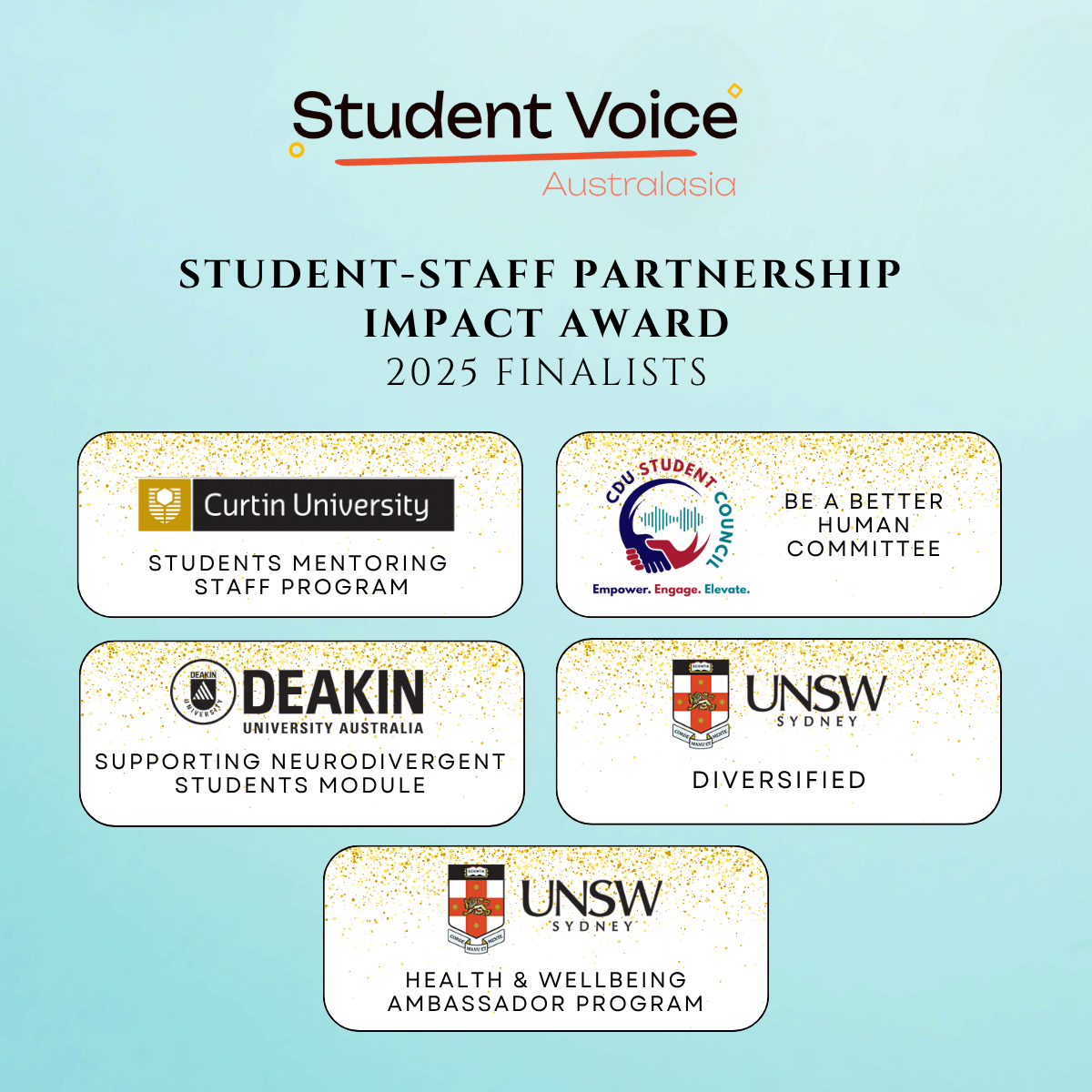
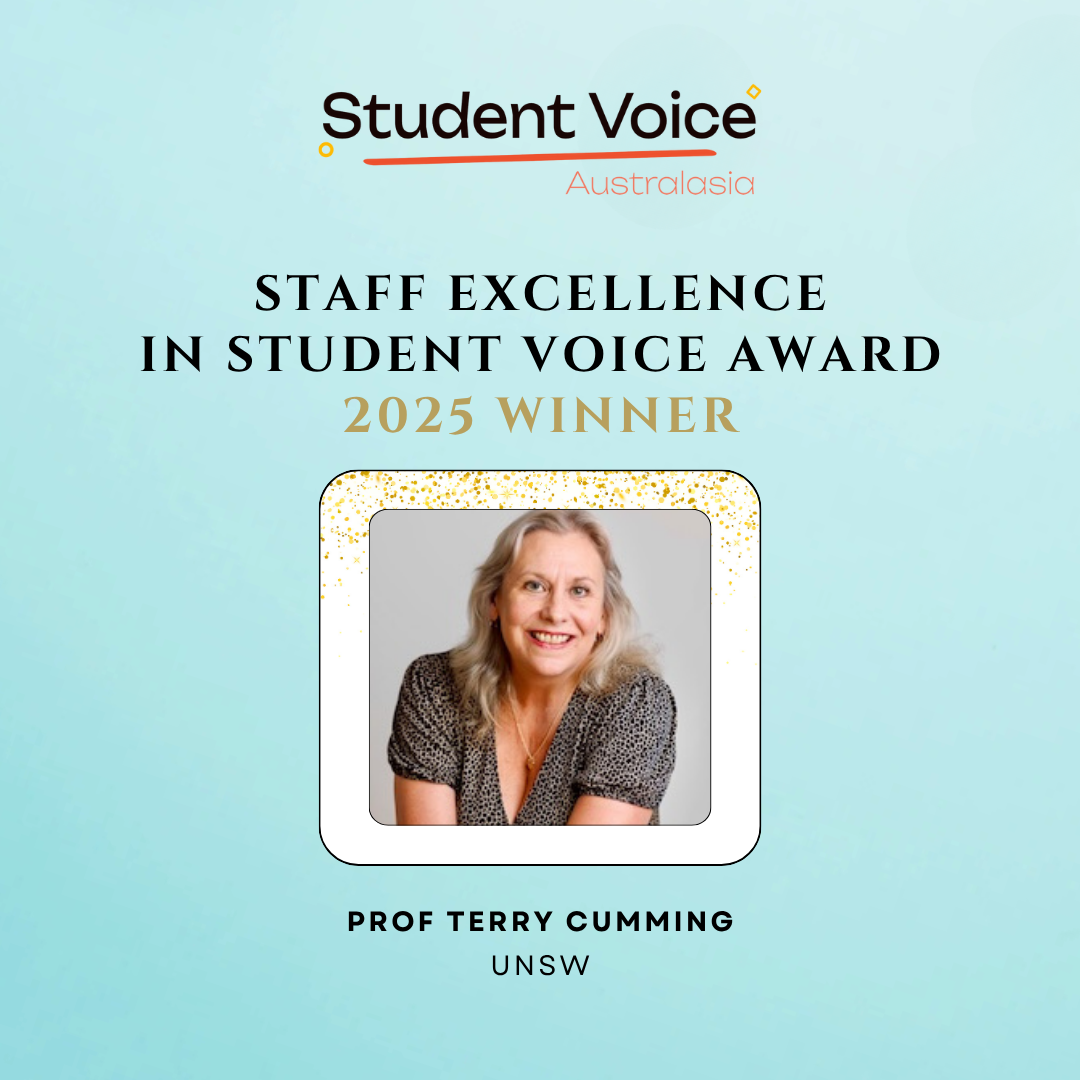
Professor Terry Cumming is the driving force behind Diversified, a groundbreaking initiative at UNSW that embeds Universal Design for Learning and neuroinclusive practices into teaching and assessment.
Terry’s leadership has transformed student-staff partnerships by positioning neurodivergent and disabled students as co-researchers and co-creators. Through inclusive workshops, lived-experience resources, and staff development programs, she has reshaped institutional culture and practice.
Her mentorship empowers students to lead, publish, and present on global stages, while her openness about her own neurodivergence fosters psychological safety and authenticity. Terry’s work is a model of systemic, student-led change—making UNSW a leader in inclusive education.

-
Deakin University is the 2025 winner for its pioneering Equity-First Students as Partners (SaP) program, which has redefined how student voice is embedded across governance, teaching, and institutional culture.
Established in 2021, the program centres equity and lived experience, engaging over 600 students—94% from equity cohorts—in paid partnership roles. Through initiatives like Microgrant Projects, Students Mentoring Staff, Advisory Groups, and Coffee Conversations, students co-lead curriculum design, assessment reform, and policy development.
The program’s scaffolded approach supports staff and students at all levels of experience, fostering authentic collaboration and cultural change. Outcomes include redesigned learning units, inclusive teaching resources, and improved staff understanding of student barriers. Deakin’s model has influenced national practice, with other universities adopting its framework.
This award celebrates Deakin’s leadership in creating a partnership culture where student voice is not only heard—but drives meaningful, systemic change.
-
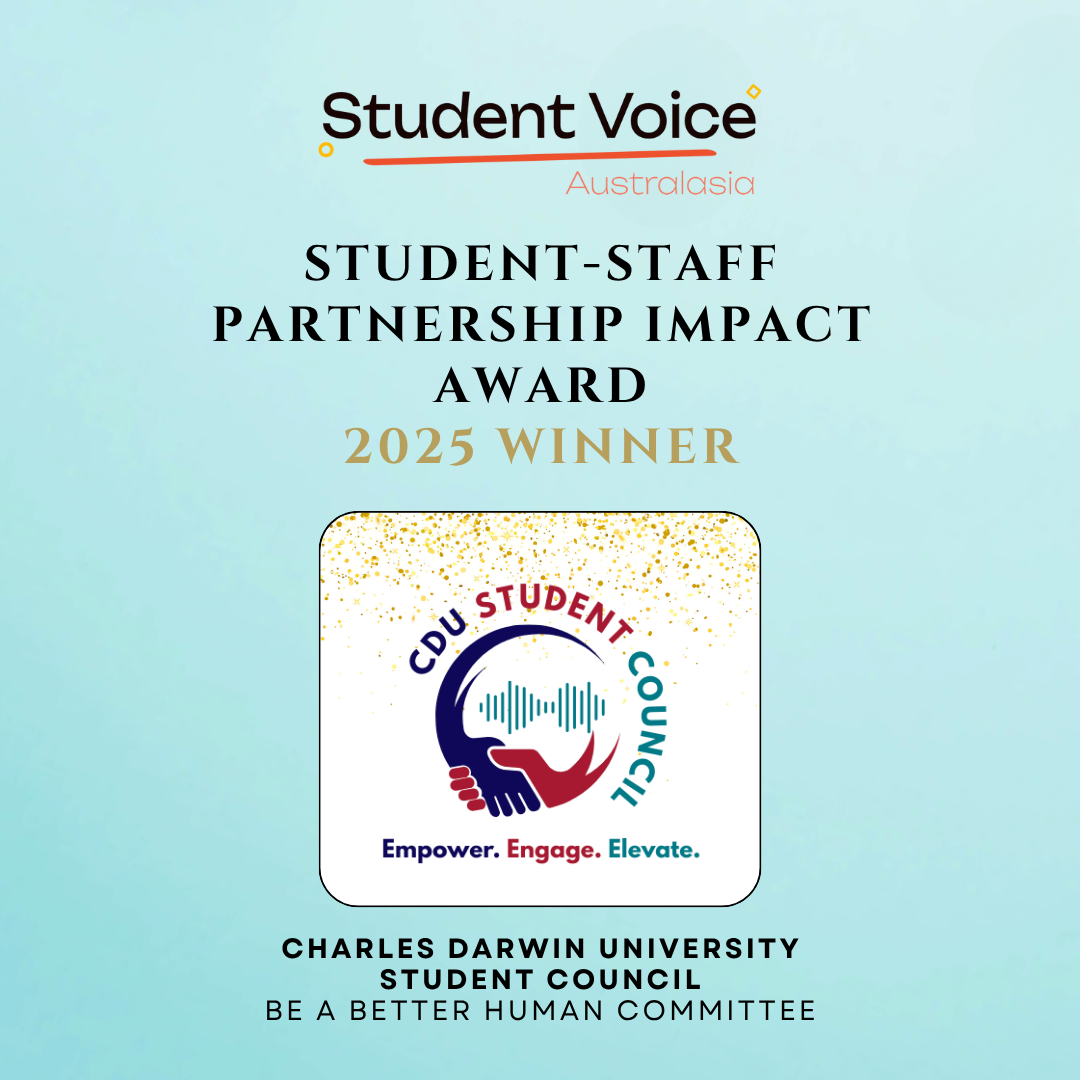
Charles Darwin University Student Council is recognised for its powerful student-staff partnership through the Be A Better Human (BABH) Committee, which co-led the university’s Respect Month and gender-based violence (GBV) prevention campaign in 2025. Building on the Be a Better Human platform established by Flinders University Student Association, CDU's BABH Committee brings together 10 students and 7 staff to work collaboratively to deliver 15 events and a digital campaign focused on consent education, stigma reduction, and community safety. Initiatives included creative workshops, anonymous Q&A platforms, and partnerships with lived-experience advocates and local services. The campaign led to a 133% increase in help-seeking via CDU’s sexual violence reporting tool and a 300% rise in student engagement. BABH exemplifies how genuine co-creation can shift culture, strengthen safety, and position CDU as a sector leader in GBV prevention.
Congratulations to the 2025 Finalists